BIS CRS Certification for Cash Dispenser Machines
In today’s banking ecosystem, Automatic Teller Cash Dispenser Machines (ATMs) play a crucial role in ensuring seamless financial transactions for millions of people. From withdrawing cash to checking account balances, these machines make banking accessible around the clock. To enhance their safety, reliability, and compliance, the Bureau of Indian Standards (BIS) has brought ATMs under the Compulsory Registration Scheme (CRS) as per Indian Standard IS 13252:2010.
This regulation makes it mandatory for manufacturers to secure BIS CRS Certification before introducing Automatic Teller Cash Dispenser Machines into the Indian market. Whether you are a domestic manufacturer or an international one planning to sell in India, BIS registration is a non-negotiable requirement.
In this blog, we will explore what BIS CRS certification is, the registration process, applicable rules, documents required, and why BIS registration in Chennai and Tamil Nadu is becoming increasingly important for manufacturers.
What is an Automatic Teller Cash Dispenser Machine?
An Automatic Teller Machine (ATM) is an electronic telecommunications device that allows bank customers to perform essential financial transactions without direct interaction with a bank employee. These include:
- Withdrawing and depositing cash
- Checking account balances
- Transferring funds between accounts
- Accessing account-related details anytime, anywhere
As per the ATM Industry Association, nearly 3.5 million ATMs were operational worldwide by 2015, highlighting the scale and significance of these machines in global banking. With such widespread usage, ensuring security and product reliability becomes critical. This is exactly where BIS CRS certification plays a vital role.

What is BIS CRS?
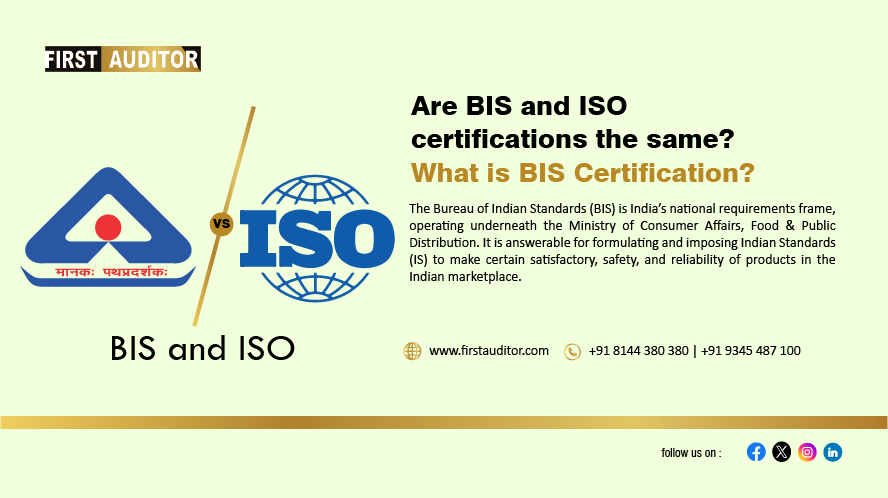
The Compulsory Registration Scheme (CRS) is governed by the Bureau of Indian Standards (BIS) under Scheme II of the BIS (Conformity Assessment) Regulations, 2018. It requires manufacturers of notified electronic products (including ATMs) to obtain BIS certification before selling in India.
BIS certification allows manufacturers to use the Standard Mark along with a unique R-number, confirming that the product complies with the applicable Indian Standards. This provides customers and businesses assurance of product safety, durability, and performance.
For businesses looking to expand into South India, services like BIS registration in Chennai and BIS registration in Tamil Nadu are essential to ensure smooth entry into the Indian market.
Who Can Apply for BIS CRS Certification for ATMs?
Only manufacturers are eligible to apply for BIS CRS certification. Importers cannot apply directly, but foreign manufacturers can appoint an Authorized Indian Representative (AIR) to apply on their behalf.
- Indian Manufacturers: Must apply individually for each manufacturing unit.
- Foreign Manufacturers: You must appoint an Authorized Indian Representative (AIR) to act as the applicant in India.
- Multiple Products: If a manufacturer produces more than one product, each requires a separate BIS licence.
This helps maintain accountability at the manufacturing stage and prevents uncertified imports from entering the Indian market.
Documents Required for BIS CRS Certification of ATMs
To complete the BIS registration process, manufacturers must provide a set of mandatory documents, including:
- Copy of acknowledgement from BIS online portal
- Address proof and business licence
- Brand details (registration certificate or authorization letter if owned by others)
- Trademark application copy (for unregistered brands)
- Undertaking and affidavit (Format A/B/C depending on applicant type)
- Nomination form for AIR (for foreign manufacturers)
- ID proof of authorized signatory
- Test report from a BIS-recognized laboratory
These documents help BIS verify the manufacturer’s credibility, production quality, and compliance with Indian regulations.
BIS CRS Registration Process for ATMs
The process differs slightly between domestic and foreign manufacturers:
For Indian Manufacturers
- Submit the online application via the BIS portal.
- Get product samples tested at a BIS-recognized lab.
- Submit undertaking/affidavit in Format C.
- Pay the prescribed fees.
- Submit hard copies of the application along with the test report within 15 days.
For Foreign Manufacturers
- Appoint an Authorized Indian Representative (AIR).
- The AIR initiates the online application.
- Product samples tested at BIS-recognized labs.
- Submit undertaking/affidavit in Format A/B.
- Pay the necessary fees.
- Submit hard copies of application and test report within 15 days.
Once the application is scrutinized and queries are clarified, BIS issues the Grant of Registration. The licence is valid for two years and must be renewed every cycle.
BIS Registration Rules in India
The BIS registration rules in India are strict to ensure that only safe and high-quality products reach consumers. Some important rules include:
- No manufacturer can sell or distribute ATMs in India without BIS CRS certification.
- Only BIS-approved labs can conduct testing.
- Each manufacturing unit requires a separate registration.
- Certifications are valid for two years and must be renewed on time.
- Non-compliance can lead to penalties, product seizures, and bans on sales.
For businesses aiming to expand in South India, timely BIS registration in Tamil Nadu and other regions ensures uninterrupted operations and legal compliance.
Benefits of BIS CRS Certification for ATM Manufacturers
Obtaining BIS certification offers multiple advantages:
- Market Legitimacy: Only BIS-certified ATMs can be legally sold in India.
- Consumer Trust: Certification builds confidence among banks and end-users.
- Business Growth: Opens doors to government contracts and large-scale tenders.
- Legal Safety: Reduces the risk of penalties and regulatory hurdles.
- Competitive Edge: BIS certification differentiates your brand in the market.
Conclusion
BIS CRS certification for Automatic Teller Cash Dispenser Machines is more than a compliance requirement—it plays a vital role in ensuring product safety, performance, and customer confidence. For both domestic manufacturers and international brands aiming to sell ATMs in India, obtaining BIS registration is mandatory.
With the right guidance, the BIS registration process can be smooth and efficient. Businesses operating in South India should focus on professional services for BIS registration in Chennai and BIS registration in Tamil Nadu to gain faster approvals and market access.
Ultimately, following BIS registration rules in India ensures long-term business growth, consumer satisfaction, and compliance with national quality standards.
Frequently Asked Questions
To ensure reliable performance, consumer safety, and compliance with Indian regulatory standards.
Manufacturers, both Indian and foreign, must secure BIS CRS certification before selling in India.
It enhances brand credibility, market access, and assures customers of product safety and reliability.