
WhatsApp Mail Us Call Us

Sole Proprietorship Registration

We specialize in Sole Proprietorship Registration services to help your business meet compliance requirements and contribute to sustainable growth. Our services include the following:

Get Specialized Assistance

Overview

Sole Proprietorship Registration in India

A Sole Proprietorship is the simplest and most common form of business organization in India, owned, managed, and controlled by a single individual. As the name suggests, it is an organization created in a single person's name, where that person is the sole owner, manager, and in charge of all operations. Anyone who wants to start a business can easily form a sole proprietorship without having to go through any complicated legal procedures. The sole proprietor must be an Indian national and resident. There is no separate legal entity for the business, meaning the owner and the business are considered the same for legal and tax purposes.
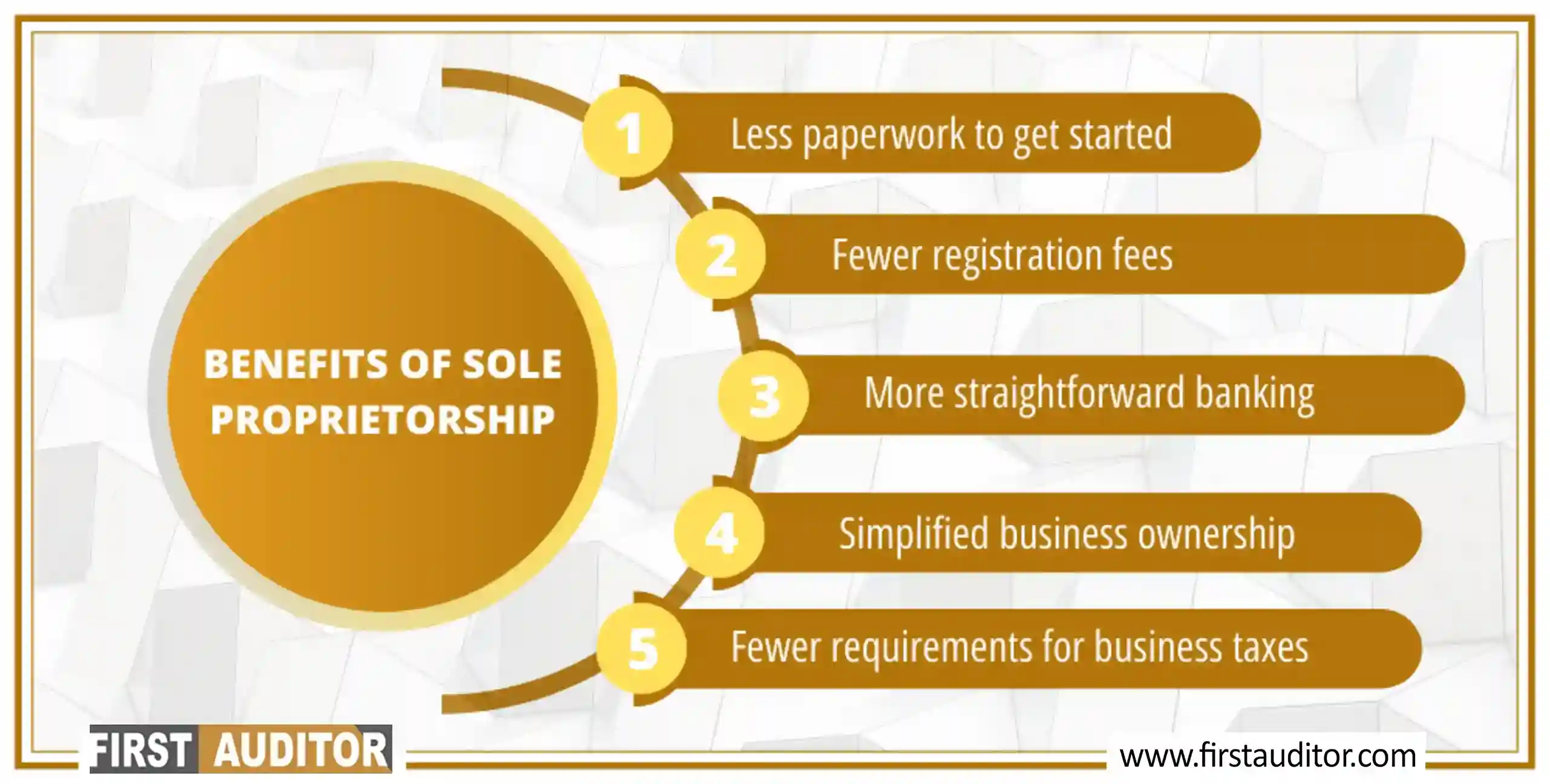
Sole Proprietorship Registration Services
Who Needs This Service

Is a Sole Proprietorship the right fit for you?

A Sole Proprietorship is ideal for individuals who want to start a business with minimal compliance and full control.

  • Individuals who want to start a business on their own with complete control
  • Freelancers, consultants, and independent professionals
  • Small business owners who want minimal paperwork and compliance
  • Home-based businesses and local service providers
  • E-commerce sellers and online store owners
  • Individuals who want to test a business idea with minimal investment
Eligibility Requirements

Who can start a Sole Proprietorship

  • Any Indian citizen who is 18 years of age or older
  • The individual must be of sound mind and competent to contract
  • The business must be legal and lawful
  • No minimum capital requirement
  • No minimum number of people required (only one owner)
  • The business must have a registered office address in India
Documents Required

What to keep ready

Documents required for various registrations that a sole proprietorship may need.

Proprietor
  • PAN card of the proprietor
  • Aadhar card of the proprietor
  • Passport-size photograph
  • Bank account details
Registered Office
  • EB card / utility bill of the registered office
  • Rental agreement (if rented) with owner's No Objection Certificate
  • Sale deed / property tax receipt (if self-owned premises)
Business Registrations
  • GST Registration (if applicable)
  • Shop and Establishment Act License
  • Udyam Registration (MSME)
  • FSSAI License (if applicable)
Step-by-Step Procedure

How to register a Sole Proprietorship

The process involves obtaining various registrations required to operate a sole proprietorship.

01
1–2 working days

Decide on Business Name

Choose a unique name for your sole proprietorship that reflects your business activity and is not similar to any existing business or trademark.

02
1–2 working days

Obtain PAN and TAN

Apply for the proprietor's Permanent Account Number (PAN) if not already available, and obtain a Tax Deduction and Collection Account Number (TAN) if required.

03
2–3 working days

GST Registration

If your annual turnover exceeds the prescribed threshold (₹20 lakhs for services, ₹40 lakhs for goods) or if you're engaged in inter-state supply, you must register for GST.

04
2–3 working days

Shop and Establishment Act License

Register under the Shop and Establishment Act of your state to obtain a license to operate a commercial establishment.

05
1–2 working days

Udyam Registration (MSME)

Register as a Micro, Small, or Medium Enterprise under the Udyam portal to avail government benefits and subsidies.

06
Ongoing

Post-Registration Compliance

We assist with opening a current bank account, filing income tax returns, and setting up the first-year compliance calendar.

Authority, Timeline & Fees

Where the file goes, and what it costs

Government Authority

Multiple authorities including Income Tax Department, GST Council, State Government (Shop & Establishment), and MSME Ministry.

Estimated Processing Period

Typically 7–10 working days from complete document submission, depending on the various authorities' processing times.

Identifiers Issued

PAN, TAN, GSTIN, Shop & Establishment License, and Udyam Registration Certificate.

Fee Structure

Government fees for various registrations, plus a professional fee for application and follow-up.

ComponentPaid toNature of charge
PAN / TAN fee Income Tax Department Fixed, as prescribed
GST Registration fee GST Council No fee for registration
Shop & Establishment fee State Government Varies with state and type of establishment
Professional fee First Auditor Quoted upfront, one-time

Government fees are prescribed by the respective authorities and vary based on location and business type; our team quotes both components separately before you proceed, with nothing added later.

Validity & Renewal

Do the registrations expire?

Most registrations are valid until cancelled or surrendered, but some require periodic renewal. Here's what you need to know:

  • PAN and GST registration are valid indefinitely unless cancelled or surrendered
  • Shop and Establishment License generally requires annual renewal with the state government
  • Udyam Registration is valid for the lifetime of the business, subject to annual updation
  • Annual income tax return filing is mandatory for the proprietor
  • GST returns must be filed monthly/quarterly and annually as per the GST laws
Common Reasons for Rejection

What causes applications to be rejected or delayed

  • Mismatch between PAN, Aadhaar, and address proof details of the proprietor
  • Incomplete or expired address proof for the registered office, or a missing owner NOC
  • Business name too similar to an existing registered business or trademark
  • Incorrect or incomplete information in the application forms
  • The business activity requires a specific license that hasn't been obtained
  • Non-compliance with local municipal or state regulations
How First Auditor Assists

One team, from registration to your first compliance filing

We manage every registration and application so you are never navigating the regulatory system alone.

Name & structure check

We verify name availability and ensure your business structure meets all regulatory requirements.

Document preparation

We prepare and review all documents to ensure they meet the requirements of each authority.

Application filing

We file applications with the Income Tax Department, GST Council, state government, and MSME Ministry.

Bank & compliance follow-up

We coordinate bank account opening and set up the first-year compliance schedule.

Compliance calendar

A first-year compliance schedule so no tax or regulatory deadline is missed.

Dedicated support

A single point of contact for questions throughout the process.

Frequently Asked Questions

FAQ

No, it is not necessary to register a sole proprietorship firm in India. It is entirely optional and up to the sole proprietor's discretion. Banks, however, demand that the company be registered if the owner or sole proprietor plans to open a bank account in the company's name.

Yes, it is necessary for the proprietor of a small business to register for GST in situations where the annual turnover exceeds the thresholds of Rs. 40 lakhs (for goods) and Rs. 20 lakhs (for services), the Reverse Charge Mechanism, agents and distributors of input services, e-commerce aggregators, and the provision of information, database, and retrieval services to a person residing outside of India.

The phrase "Sole Proprietorship Registration" refers to the process of registering an unregistered company whose owner, manager, and controller is that company's sole proprietor. It involves obtaining various licenses and registrations like PAN, GST, and Shop & Establishment License.

Yes, a sole proprietor has the power to hire employees. The maximum number of employees that a sole proprietor may employ is also uncapped. However, hiring employees may trigger additional compliance requirements like ESI and EPF registration.

As the sole proprietor of a company, a sole proprietor has exclusive control over all business operations and is eligible to earn all profits and gains. He is also responsible for paying for any damages the company suffers.

A sole proprietor has unlimited liability, meaning they are personally responsible for all debts and obligations of the business. If the business fails or incurs debt, the proprietor's personal assets may be used to satisfy business liabilities.
Registrar
Ready

Ready to start your Sole Proprietorship?

Talk to a First Auditor specialist today — get a clear fee quote and document checklist before you start.

Request a Callback
Disclaimer: This page is provided for general informational purposes only and does not constitute legal, tax, or professional advice. Government fees, processing timelines, and documentation requirements are prescribed by the respective authorities and are subject to change without notice. First Auditor is an independent professional services firm and is not affiliated with, or an agent of, any government department. Please consult our team or a qualified professional for advice specific to your situation before making any registration decision.
Startup

ISO Certifications

CDSCO Medical Devices

CDSCO Cosmetic

Invitro Diagnostic Device

Hiring Documents

Business Certification

Certification

Bureau of Indian Standards

Business Collabrations

Service & vendor

Business License

Drugs

EPR

Websites Policies
Trademark

Business Conversations

Changes in Pvt

Overview Of Annual Fillings

Changes in LLP