EPR for Plastic Recycling in Chennai & Tamil Nadu
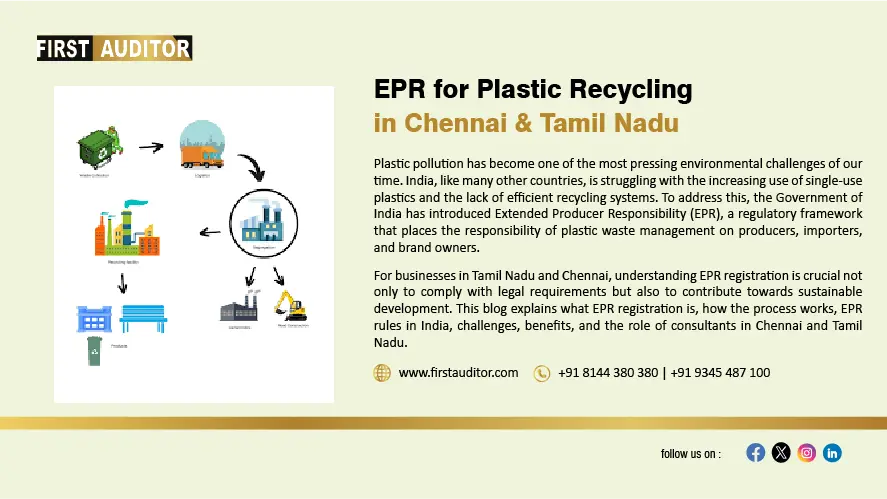
Plastic pollution has become one of the most pressing environmental challenges of our time. India, like many other countries, is struggling with the increasing use of single-use plastics and the lack of efficient recycling systems. To address this, the Government of India has introduced Extended Producer Responsibility (EPR), a regulatory framework that places the responsibility of plastic waste management on producers, importers, and brand owners.
For businesses in Tamil Nadu and Chennai, understanding EPR registration is crucial not only to comply with legal requirements but also to contribute towards sustainable development. This blog explains what EPR registration is, how the process works, EPR rules in India, challenges, benefits, and the role of consultants in Chennai and Tamil Nadu.
What is EPR Registration?
Extended Producer Responsibility (EPR) registration is a mandatory compliance requirement for companies that manufacture, import, or sell plastic products in India. Under the EPR framework, these producers are responsible for collecting, recycling, or properly disposing of plastic waste generated from their products.
In simple terms, EPR ensures that producers share the responsibility for the entire life cycle of plastics, right from production to recycling. If a company sells bottled water, for instance, it must ensure those bottles are collected and recycled instead of polluting the environment.
Businesses operating in Tamil Nadu and Chennai must apply for an EPR certificate through the Central Pollution Control Board (CPCB) or the Tamil Nadu Pollution Control Board (TNPCB) depending on their category.
EPR Registration Rules in India
The Plastic Waste Management Rules, 2016 (amended in 2022) make EPR registration mandatory for:
- Plastic manufacturers and importers
- Brand owners selling products with plastic packaging
- Businesses using plastic packaging for distribution
As per EPR rules in India, registered companies must:
- Collect and recycle a fixed percentage of plastic waste each year
- Submit annual compliance reports to CPCB/State Pollution Boards
- Use sustainable packaging solutions wherever possible
- Meet recycling targets as notified by the government
Failure to comply with EPR rules can result in heavy fines, cancellation of licenses, and legal penalties.
Why EPR for Plastic Waste is Important
The implementation of EPR for plastic waste has multiple benefits:
- Environmental Protection – Reduces plastic littering in landfills, rivers, and oceans.
- Circular Economy – Encourages reuse, recycling, and eco-friendly packaging.
- Innovation in Recycling – Motivates industries to invest in advanced recycling technologies.
- Consumer Awareness – Packaging with EPR logos guides consumers on proper disposal.
- Compliance & Branding – Businesses complying with EPR rules enhance their brand reputation.
For Tamil Nadu, where urbanization is driving plastic consumption, EPR registration in Chennai is a step toward sustainable waste management.
EPR Registration Process in Chennai & Tamil Nadu
If you are a business dealing with plastics, you must follow the EPR registration process:
- Eligibility Check – Identify whether you are a Producer, Importer, or Brand Owner (PIBO).
- Document Preparation – Prepare documents like company incorporation certificate, GST, PAN, product details, and waste management plan.
- Application Submission – Apply for an EPR certificate online in Tamil Nadu via the CPCB portal.
- Review & Approval – Authorities review the application and grant approval if all requirements are met.
- Compliance Reporting – Regularly update records and submit compliance reports on plastic waste collection and recycling.
Businesses often seek help from EPR registration consultants in Chennai to avoid errors and ensure faster approvals.
Challenges in Implementing EPR for Plastic Recycling
While the policy framework is strong, businesses face some challenges in executing EPR plans:
- High Compliance Costs – Many small businesses worry about the EPR registration cost in Chennai and operational expenses.
- Infrastructure Gaps – Lack of sufficient recycling units in rural areas of Tamil Nadu.
- Consumer Awareness – Many consumers are unaware of their role in returning or segregating plastic waste.
- Operational Complexity – Managing collection, recycling, and reporting requires strong systems.
Despite these hurdles, EPR has significantly improved plastic waste management compared to earlier practices.
Role of EPR Registration Consultants in Chennai
For businesses unfamiliar with the rules, hiring EPR registration consultants in Chennai is often the best solution. Consultants help with:
- Preparing required documentation
- Filing applications for EPR license online in Tamil Nadu
- Estimating EPR registration cost in Chennai based on company size and packaging volume
- Drafting compliance reports
- Guiding on best practices for plastic waste recycling
By leveraging expert guidance, businesses can avoid penalties and focus on sustainable operations.
How to Apply for EPR Certificate in Tamil Nadu
To apply for an EPR certificate in Tamil Nadu, businesses must:
- Register on the CPCB portal (for pan-India operations) or TNPCB (for state-specific operations).
- Submit product and packaging details.
- Attach supporting documents like PAN, GST, and incorporation certificate.
- Pay the applicable fees.
- Track application status online until approval is granted.
Once granted, the EPR license online in Tamil Nadu is valid for a specific duration and requires timely renewal.
Conclusion
Plastic waste is a serious environmental challenge, but through EPR registration in Chennai and Tamil Nadu, businesses can take responsibility for sustainable waste management. By complying with EPR registration rules in India, companies not only avoid penalties but also build a reputation as environmentally responsible brands.
With the support of EPR registration consultants in Chennai, the process of applying for an EPR certificate in Tamil Nadu becomes much smoother. Although challenges like cost and infrastructure exist, the long-term benefits of cleaner cities, reduced pollution, and compliance with sustainable development goals make EPR essential.
By adopting EPR for plastic waste, Tamil Nadu can lead the way toward a circular economy where plastics are recycled, reused, and managed efficiently. Now is the right time for businesses to apply for their EPR license online in Tamil Nadu and contribute to a greener future.
Frequently Asked Questions
EPR ensures producers take responsibility for plastic waste collection and recycling, reducing pollution across Tamil Nadu.
It helps Chennai businesses comply with waste rules, enhance sustainability, and build eco-friendly brand credibility.
They can register online through the CPCB portal by submitting required documents and fulfilling recycling obligations.